

How the gap was measured
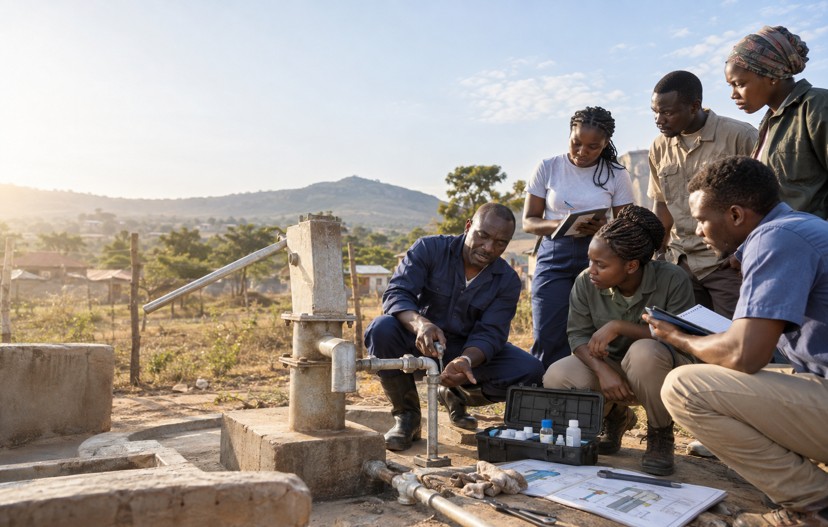
Between February and July 2026, the partners reviewed 85+ regional and country-level sector diagnostics and skill gap studies and interviewed 45+ regional and global experts and practitioners. In parallel, they aggregated 1,000+ training catalogues and webpages into a database of 550+ French-language training opportunities, each documented across 16 dimensions – provider type and location, topic, competency level, target group, format, duration, cost and certification status – to support decision-making. Gaps were identified by systematically comparing this supply evidence against demand data on thematic coverage, targeting, geographic accessibility, delivery format and cost.
A thin, uneven pipeline
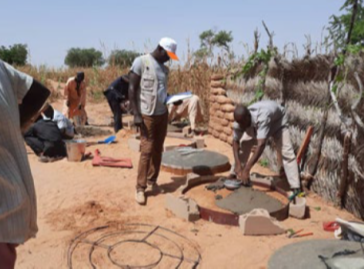
Among the training opportunities catalogued, only one addresses safely managed sanitation specifically, only one addresses climate-resilient sanitation, and only one addresses social and behaviour change for sanitation. Just two dedicated French-language courses on hygiene were identified. Broader sanitation courses do sometimes include rural or climate-related content as modules within wider curricula, but as standalone, dedicated training responding to these priority topics, the offer remains thin relative to documented needs.
Beyond the numbers: targeting and delivery
The broader pattern across the sector is that trainings are concentrated on urban settings and engineering content, leaving rural areas and the “software” dimensions of service delivery — management, governance, financing, social and behaviour change, monitoring — comparatively neglected. For sanitation specifically, this means that non-sewered, household-level, financing and sustainability dimensions of the service chain remain comparatively underserved.
Training also clusters at two extremes: long academic degrees concentrated in a handful of capital cities, versus short online courses that mainly reach managers rather than field-level workers such as pit emptiers, artisans and small-scale operators. Cost is a further barrier for this workforce: the median continuing professional education short course costs €1,120 — more than double the €450 median annual tuition of an African university degree — and only 13% of these courses are free.
Designing training for rural contexts
Given the connectivity constraints of many rural and field-level sanitation workers, the finding that over half of continuing professional education courses are delivered online — with completion rates of just 10–25% for self-study/self-paced ones — points to a significant access mismatch. Online training appears best suited to short, introductory content rather than as a stand-alone, long-format course. An emerging practice-oriented, modular training combined with on-the-job coaching and peer support is a better-suited alternative for pit emptiers, artisans and small-scale providers, whose skills are best built through hands-on, workplace-based learning. Artificial intelligence is also flagged as a largely untested opportunity to make training more tailored and interactive and continue to support learners after the training ends.
Proposed early-stage directions
Four early-stage directions have emerged from the analysis so far and will be refined through further consultations with regional and country-level stakeholders on selected aspects. They are explicitly designed to build on and coordinate with existing initiatives rather than create parallel structures.
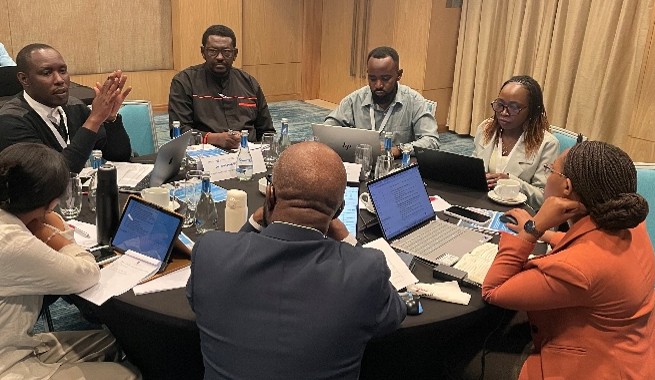
One direction focuses specifically on developing new French-language training courses, including one on on-site, safely managed, climate-resilient rural sanitation and household financing mechanisms — supporting local governments, communities and households in investing in, building and maintaining safe sanitation facilities, including in flood- and drought-prone areas. Another training content would focus on how to improve monitoring and regulation at both the service and sector levels, including for sanitation. This sits alongside three further directions: strengthening national TVET competency and certification frameworks and support to selected training centres for field-level sanitation roles, with a focus on lower-skilled workers, including pit emptiers and small-scale providers; promoting and scaling up workplace-based learning such as apprenticeships, ‘chantiers-écoles’ and on-the-job coaching; and an African (or global), French-language Resource Hub and Help-Desk. The Help-Desk is an open-access, demand-driven technical support system combining AI and human expertise, connected to comparable initiatives in other regions and WASH sub-sectors, including humanitarian WASH (e.g. SaniHub / WASH Hub).
On the sanitation training content specifically, this work is designed to complement rather than duplicate existing efforts such as the CWIS ISC-Hub (supported by 2iE and the Gates Foundation) as well as the Global Sanitation Graduate School, which focuses on urban and citywide sanitation, in contrast to this initiative's emphasis on rural contexts.
Get involved
These are preliminary findings. Further consultations will complement the evidence base and inform the roadmap. SuSanA members and partners are warmly invited to get in touch — whether to share training opportunities not yet captured in the mapping, provide relevant evidence, or collaborate on developing new training content, the French-language Resource Hub and HelpDesk concept, and implementation of the other proposed actions.
Contacts
Franck Bouvet, UNICEF — fbouvet@unicef.org
Gloria Nyam Gyang, UNICEF — gngyang@unicef.org
Shirish Singh, IHE Delft — s.singh@un-ihe.org
Boukary Sawadogo, 2iE — boukary.sawadogo@2ie-edu.org
Jérémie Toubkiss, International Consultant — j.toubkiss@gmail.com
